Showing posts with label staff. Show all posts

Monday, January 2, 2017

Why Relationships Are the Foundation of Education

When I first started teaching, I wasn’t very good.  I had no teaching experience and really no interest in being a teacher.  I never really had a positive school experience in the different schools I went to.  I attended private schools for over 19 years of my schooling throughout my childhood and into adulthood.  During those years, I honestly thought a good education could be summed up into 3 areas:
  1. Teachers having control over the classroom and students;
  2. Writing notes and doing it as fast as you could was the recipe for success;
  3. Never question the teacher’s or professor’s knowledge or teaching practices.
When you attend private schools for all of those years and see the same practices and rules over and over again, that’s really all you know about education.   I believed that was the way teaching was done everywhere and how everyone had to learn in order to be successful.


Believe it or not, there is research and data that supports the theory that many teachers teach  the same way they were taught to when they were in school if the practice was successful for them.   As you can imagine (and is usually the case with many educators), when I first began teaching, I taught the same way as the teachers did when I was in school:
  1. I dictated and controlled the learning environment;
  2. I presented information to students the way I wanted it presented and in the manner which was most comfortable to me; and
  3. I expected students to memorize the information I had given them and regurgitate it to me when we had assessments.
Thus, I was sharing my awful learning experiences with my students.  Sort of taking it out on them.  That’s all I knew about education.
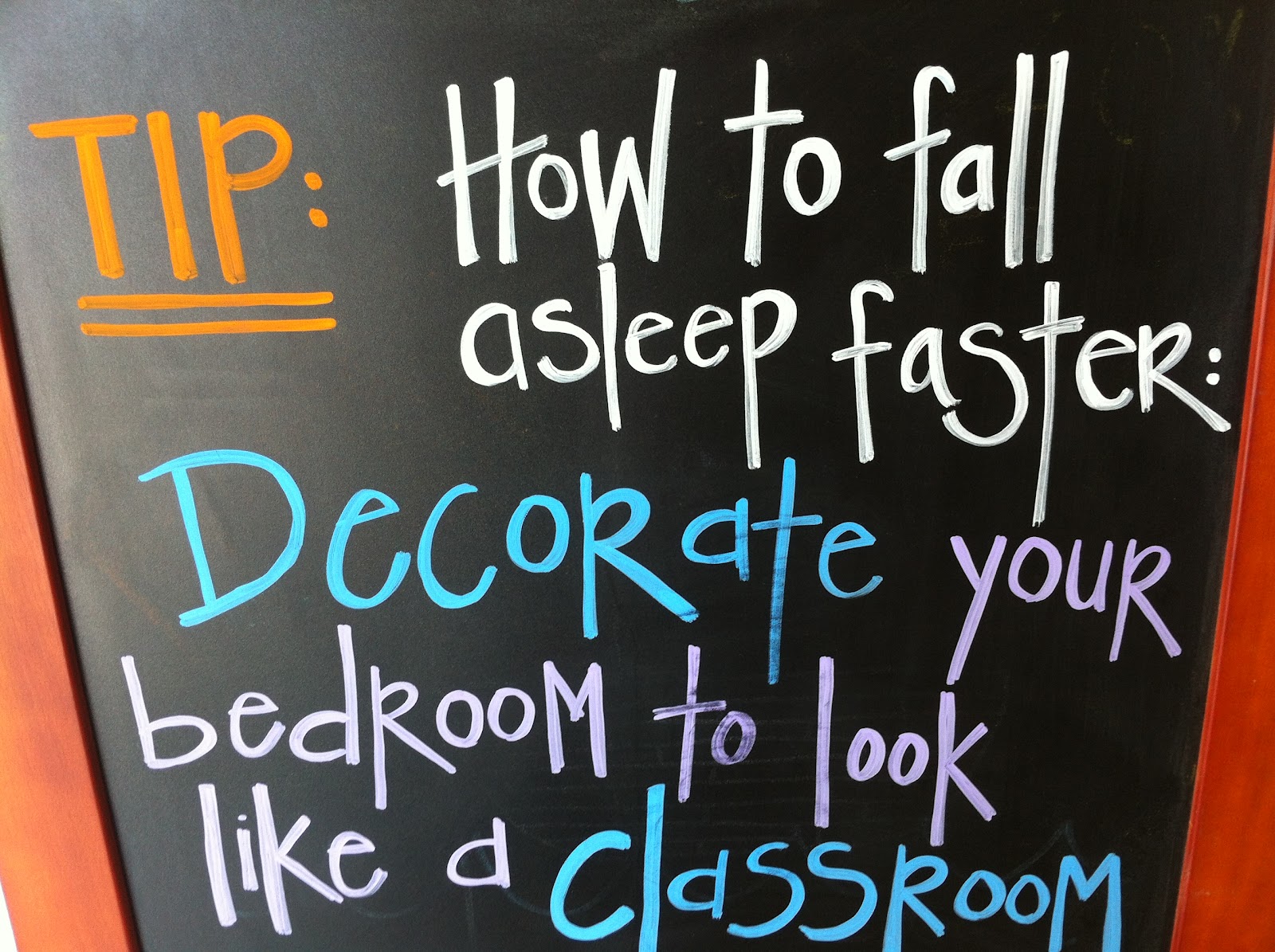

fall_asleep_faster.jpg


While my methods needed a lot of work and my expectations for students were out of touch with reality, there was one area where I was progressing nicely.  During my life, I have always been a pretty good judge of people.  I have also been able to build relationships with many different people throughout my life.  While I had a lot of work to do when it came time to presenting content in an engaging learning environment, I was pretty good at building relationships with students.  So while I felt I had a long way to go to be a good teacher, I knew I could relate to students and staff members.  The ability to relate and work with students and staff really kept me in teaching.  It pushed me to get better because I wanted to be the best for the people who counted on me each day to be the best.


I will always remember one student I had in particular during my teaching days.  He was a transfer student and this was his third school to date and it was only November.  His appearance was different than the rest of the student body: piercings, tattoos, hair over his eyes, black leather clothing.  He was distant and kept to himself.  In a small community, I’m sure it was difficult for him to make friends at all, let alone with one person.
The student was in my Web Design class and had academic success in the class.  He completed projects, he took notes while watching online videos to learn how to create better graphics, and he was always respectful and polite to me and the other students.  In his other classes, he was completely the opposite.  It seemed no other staff members could reach him and connect with him.  Once grades came out, he was failing all of his classes, except Web Design and my wife’s class (who is a master at building relationships).


One of his other teachers asked me what I was doing to get results from him.  I didn’t have much to say, I told her “Nothing.”  She replied, “Well, you must be doing something.”  I said, “Well, I treat him like a human being.”  The teacher laughed and said, “We all are doing that.”  I replied, “I disagree.  In my daily conversations with him, I’ve never heard him mention another staff member’s name or anything about his other classes that he enjoys.”  As you can imagine, that wasn’t taken very well, but it was the truth.


The point of the story is to show sometimes it just gets down to treating people the way we want to be treated and want our children or family members to be treated.  While I wasn’t the greatest teacher, even in my own department, I utilized my ability to build relationships to help others and help me get better.  Let’s take a look at 4 key aspects I always keep in mind when it comes to creating meaningful relationships:


  1. Don’t make excuses
I don’t think making excuses helps anybody in education.  We can’t say, “I have over 150 students each day, I can’t build relationships with everyone.”  Each student is an individual.  Each parent of our students expects their student to be given the best learning environment as possible.  We need to make that happen each day.


    2.  Listen, Respond, Ask Questions, Repeat
Every student has a story.  Instead of always thinking the worst, we need to listen to students to feel where they are.  Model the behavior we expect to see from our students.


    3.  Compassion
At some point in all of our lives, we have needed something.  Someone has had to help us out at some point.  Always remember this when working with students.  Instead of initially feeling students are trying to take advantage of us, let’s look at it as students are reaching out for help.


    4. Sacrifice
How much time and investment do you put in each day for students and other staff members?  If our job as educators was easy, everyone would be doing it.  To be the best, in any endeavor or occupation, you have to make sacrifices.  Whether it is before school or after school sessions, being a part of teams and committees, or advising a club, we all need to make a sacrifice for your students and/or staff.  It will make a difference.
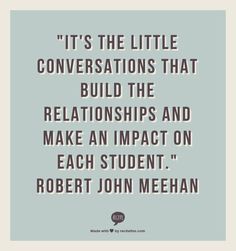

little_things.jpg

The above quote by Robert Meehan really does say it all.  The little things add up to a lot in education.  Little things are what make relationships successful.  Its our job to find the little things that help build relationships with students and staff.  Try making building relationships with students and staff a daily exercise and practice in order to improve the culture of your school and classroom.

Sunday, March 6, 2016

5 Point Checklist to Identify Professional Development Needs

As a kid, I always loved watching commercials.  Even today, when my kids are watching shows, there are hundreds of companies selling toys online and on TV.  Back in my day, I would see different things I thought were cool, and after being told “No, we aren’t going to buy that” enough times, I would try to figure out a way to: a) purchase the toy myself or b) make the toy myself.  As you can probably relate, the purchasing of the toy myself would never materialize.  I always had to fall back on option b).

As a kid, you believe you can build anything and always just jump right into creating.  Inevitably in my “creativity” phase, I would encounter the same problem each time.   I would need a certain tool or need the know-how to operate a certain a tool to make a portion of the toy and didn’t have the knowledge or experience to operate the tool.  Instead of asking others for assistance and using the resources available to me, my production design would end at this point.  In reality, all I needed was some help and guidance.  I just never took advantage of it.  I’m not saying I would have replicated the toy, but at least I would have made the effort and had a better chance to see the production through.  I needed to focus more on where to start instead of re-creating the toy itself. 

As leaders, we encounter the same thing each day.  We have great ideas and have a vision of how we want to get there, but many times fail because of our lack of knowledge and experience in implementation.  Being a leader in any organization is not an easy task. Leaders have many different roles each day: managing different departments, organizing daily tasks, delegating responsibilities, and maintaining a healthy work climate and culture to name a few.  Depending on what organization you’re in, one can take precedence over the other and change on a daily basis.  While that may be the case, as leaders, ultimately we are still responsible for the daily growth of our organization and the staff.


The real talent in leadership is determining where to start when it comes to organization and staff growth.  Finding that exact point where to start before the plan.  Too many times we get lost in the overall outcome instead of focusing on the process.  Narrowing in on the process will make our overall goal stronger.  Having a plan for identifying the needs for developing your staff will make you a more effective leader, create more buy-in from your staff, and help strengthen building culture.  Let’s take a look at 5 areas to focus on when determining what your staff needs for development and how your organization will get there:

Align your Development with Building Goals & Vision
Your professional development needs to align with where you are going.  There is no reason to train staff on areas that are not part of your overall goal.  Doing so takes away from the overall growth and development of your organization.  Focus on your goals and vision and align your professional development towards both.


Visibility
We don’t know what we don’t know.  Don’t know who first said it, but it is true.  If you are not visible and involved in your organization, you don’t know your strengths and weaknesses.  For example, as a building administrator in a school, it is imperative that you are in classrooms to see what learning methods your teachers are using and where there are opportunities for growth.  Sure, you could take others word for what is good and bad in the organization, but as a leader, it is vital to stay in the trenches and see it for yourself.

Ask Questions
Being visible is good, but you also need to ask your staff what they need to get better.  There are many ways to do this.  Many organizations use Google and Google Forms and surveys to collect information from staff.  A lot of times, face-to-face discussions with staff members are the most effective way to find out what they need.  Simple questions like: “How do you want to grow?” or “What do you need to get better?” can go a long way in discovering what your staff needs to excel.

Look at Data in a Different Way
Data isn’t always sales, results, or a letter grade.  While we can use this data to our advantage to grow in our organizations, we really need to look deeper within our staff to find out what we need to improve.  Gather data from what you see and hear within the organization.  For example, as a building administrator, I visit classrooms, analyze assessment results, and focus on content delivery to determine what we need and where we need to go.  You are collecting data as you go and using it to help your organization grow.  Don’t be old-school with your data collection and focus on what we always for years in business and education.  Go new-school data; gathering new data is more than just crunching numbers.


Resources
I am a firm believer that your best resources exist inside of your organization.  Find the people on your staff that can help others grow.  Encourage your best staff members to share their experiences and help the organization reach their goals.  If you follow the steps mentioned above, you will have no problem finding the talent in your organization. 

As much as I hate to say it, sometimes you have to spend money to get the best opportunity for growth for your organization.  If that is the case, find the funds you need and hire the best people possible.  Ask your colleagues and do your research on who to hire.  If you are going to pay for it, at least do the work on your end as a leader to find the best match for your staff and organization.


 Identifying what we need to get better is the first step.  Creating a plan and implementing the plan soon follow.  You can’t skip to the planning phase and hope to be successful.  Use your most powerful resource to find needs: your staff.  As a leader, don’t get lost in the planning phase like I did when I was a kid.  Go a step deeper and identify your needs to help you achieve the most success.  Your leadership skills will thank you for it.